
Economic Impact of UK Horse Racing
Best Horse Racing Betting Sites – Bet on Horse Racing in 2026
 Available in US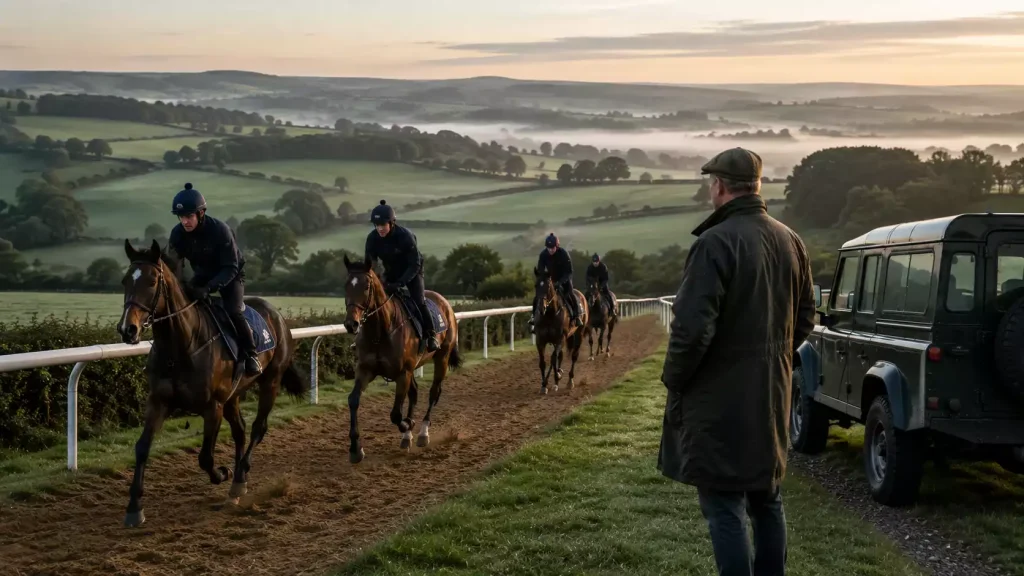
British horse racing is more than grandstands and bookmaker counters. It is a full economic chain spanning training yards, breeding operations, racecourse infrastructure, integrity services, equine welfare, regional hospitality and the wider supply of feed, transport, veterinary services and equipment that keeps the sport functioning. The headline numbers are striking – £4.1bn in direct, indirect and associated annual expenditure, around 85,000 jobs supported across the UK – but the more revealing fact is the distribution of that activity across rural Britain. Racing economies are concentrated in the kind of places where alternative employment is thin, which is why regulatory decisions taken in central London about betting markets ripple through to communities most policy debates never mention.
Understanding this economic footprint is part of understanding why the debates around the betting levy, affordability checks and the unlicensed market are so heated. The sport is not arguing for sentimental preservation; it is arguing that a substantial economic chain depends on a betting product whose health is being squeezed from multiple directions at once. The numbers below are the ground on which those arguments are made.
The mechanism that funds it: the Horserace Betting Levy.
Direct Economic Impact
The £4.1bn annual figure for British racing’s contribution covers three categories: direct expenditure (money spent inside the racing industry itself), indirect expenditure (money spent by suppliers and contractors serving the industry) and associated expenditure (spending by visitors, spectators and event attendees on travel, accommodation and hospitality). The figure is drawn from BHA evidence submitted to the Department for Culture, Media and Sport and to parliamentary committees, and is the most cited measurement of the sport’s national economic footprint.
The direct component covers the operating costs of racecourses, training yards, breeding operations, the BHA itself, racing media and the integrity infrastructure that keeps the sport credible. The 59 British racecourses are the most visible piece of this – they employ permanent staff, contract racedays operations, maintain physical infrastructure across the country and pay business rates to local authorities. Many of them sit in rural towns where the racecourse is one of the largest employers and one of the biggest event venues.
The indirect component is the supply chain. Feed merchants, transport operators, veterinary practices, farriers, tack and equipment suppliers, racecourse caterers, jockey services, racing schools and many other businesses depend on the racing economy. These supplier relationships extend well beyond the obvious sport-adjacent sectors – the construction, maintenance and IT services consumed by racecourses and training yards feed into national supply chains that touch every region.
The associated component is the hospitality and travel economy generated by racing as a spectator product. Visitors to Cheltenham Festival, Royal Ascot, the Grand National meeting and similar major fixtures spend extensively on accommodation, restaurants, transport and retail in the surrounding areas. The first half of 2024 saw more than 2.3 million attendees at British racecourses, and the spending around those visits flows through the local economies of the host towns and cities.
The breakdown matters because critics sometimes focus only on the direct piece – the racing industry itself – and conclude that the sport is smaller than it claims. The associated and indirect components are real, measurable economic activity, and they account for a substantial proportion of the £4.1bn headline.
Employment Across the Sector
British racing supports around 85,000 jobs across the UK economy, according to the House of Commons Library briefing. Of these, the BHA estimates roughly 20,000+ are direct jobs within the racing industry itself – stable staff, racecourse employees, integrity teams, breeding operation workers, training yard staff and the wider workforce of the regulated body, racing media and ancillary services.
The geographic distribution is concentrated. Newmarket alone supports several thousand jobs through its training yard complex, breeding farms, equine veterinary services and the Jockey Club estate that underpins much of the town’s economy. Lambourn in Berkshire is another major training centre with a similar dependency profile. Middleham in North Yorkshire, Malton, Epsom – each of these towns has a substantial proportion of local employment tied to racing in one form or another.
The jobs are not interchangeable with other sectors. Stable staff, conditional jockeys, bloodstock agents, racecourse groundskeepers and breeding farm managers represent specialised skill sets that don’t transfer cleanly to alternative employment if the underlying industry contracts. The wage profile is mixed – top trainers and senior racecourse executives are well-paid, but the average stable lad or lass earns modestly, and the conditions of the work are physically demanding and seasonally variable.
Beyond the direct workforce, the wider supply chain employment runs through veterinary practices, transport operators, feed suppliers, racecourse contractors and the local hospitality businesses that depend on racedays. These indirect jobs are mostly in rural and small-town locations where alternative employment is limited. The economic case for racing is partly a regional development case – the sport sustains skilled employment in parts of the country where it is otherwise scarce.
The full picture is in our guide to UK horse racing betting basics.
Breeding and Bloodstock
The breeding industry is the upstream foundation of the entire racing economy. The UK has more than 660 breeding operations producing thoroughbreds for the racing programme, ranging from large commercial studs producing horses for international sale to small family-run farms breeding a handful of foals each year for the home market.
The economics of breeding are competitive and increasingly internationalised. Top stallions stand fees from a few thousand pounds to six-figure sums, and the value of a yearling sold at a major sale depends on a complex calculation involving pedigree, conformation, sire-line performance and market timing. The Tattersalls sales in Newmarket and Goffs in Ireland are the primary commercial venues, with stock from British breeders selling alongside Irish and international consignments.
The trend in foal production is a concern. The GB foal crop fell by 4% year-on-year in 2025, continuing a multi-year downward trajectory. The cumulative effect of several years of contraction means the future supply of racehorses to the British programme is being structurally reduced. Smaller foal crops mean smaller fields at the lower levels, less depth of competition, and ultimately fewer commercial opportunities for the breeding industry itself.
The reasons for the foal-crop decline are multiple. The economics of commercial breeding have tightened as bloodstock prices have flattened and operating costs have risen. Smaller breeders have exited the market as margins have narrowed. The competitive environment for Irish-bred and continental European stock has intensified. The contraction is not catastrophic in any single year, but the cumulative effect over a decade is significant – a smaller breeding base produces fewer horses, which produces less depth of competition, which produces less of the product the betting market depends on.
The Betting Link
None of the economic activity described above would exist at this scale without the betting market that surrounds British racing. The European Commission, in its 2017 State Aid clearance decision on UK Horserace Betting Levy reforms, captured the relationship clearly: “In the UK, racing and betting have a unique interdependency that goes back over 200 years. A day at the races includes, for most participants, betting on horse races as well.” That interdependency is not a feature added later; it is foundational to how British racing functions.
The betting market funds racing in several distinct ways. The statutory levy on bookmaker gross profits – yielding £108.9m in 2024-25 – flows directly into prize money, integrity and infrastructure spending. Media rights deals between racecourses and bookmakers’ content distribution operations underpin a significant portion of racecourse income. Sponsorship arrangements between bookmakers and major races and fixtures provide further direct funding. And the betting product itself attracts the spectators, viewers and on-course attendees who generate the wider hospitality and retail economy around racing.
The contraction in betting turnover therefore threatens the wider economic chain. Falling turnover means less levy yield over time (despite recent counter-intuitive movements), less media rights value, less sponsorship and ultimately less prize money. The 20,000 direct jobs and 85,000 supported jobs sit on top of this betting-derived funding base, and any sustained weakness in the betting market translates eventually into pressure on the entire structure.
The implications for policy are politically charged. Regulators arguing for tighter affordability checks and stricter consumer protection are also, indirectly, affecting the economic base of racing. Industry bodies arguing for lighter regulation are doing so partly to preserve the funding flow that supports those tens of thousands of jobs. The debate is not abstract; it is about which trade-offs the country is prepared to make between consumer protection in betting and economic sustainability for racing.
Understanding this trade-off is part of understanding how the sport fits within the broader UK regulatory landscape. For the legal and policy context that shapes these relationships, see our guide to UK horse racing betting regulation.
FAQ
How is the £4.1bn figure for British racing"s economic impact calculated?
The figure is drawn from BHA evidence to government, combining direct industry expenditure (racecourses, training yards, breeding, regulatory bodies), indirect spending (supply chain businesses), and associated spending (visitor and spectator spending around racing events). The methodology follows standard economic-impact analysis conventions used for other UK sports and cultural sectors, and the figure is updated periodically based on the underlying activity data.
Why does the foal crop decline matter beyond the breeding industry itself?
Smaller foal crops mean fewer horses entering the racing programme in subsequent years, which leads to smaller fields, less competitive racing and ultimately less attractive betting markets. The breeding-to-betting chain operates on a long lead time – foals born in 2025 won"t race until 2027 or 2028 – so today"s foal-crop decline is shaping the racing programme of the late 2020s and early 2030s.
Is racing"s economic footprint comparable to other UK sports?
It"s measured differently and serves different purposes, so direct comparison is imperfect. Football is much larger by turnover and media value, but its employment base is more concentrated around top clubs. Racing"s footprint is more geographically distributed and more rural, with employment dispersed across hundreds of training yards and breeding operations rather than concentrated in a few major cities. The two sports are not really substitutes from an economic-policy perspective.
Where the Numbers Land in 2026
British horse racing in 2026 sits at the intersection of a substantial, durable economic footprint and a betting environment under sustained pressure. The £4.1bn of annual activity and 85,000 supported jobs are real, measurable and concentrated in parts of the country where alternative employment is limited. The £108.9m levy yield holding up despite a 16.5% turnover decline against 2022 is the paradox at the centre of the current period – record contributions on top of contracting underlying activity. Whether that paradox can hold indefinitely is the question every stakeholder in the sport is wrestling with. The numbers in the next few years will determine how British racing’s economic story reads for the rest of the decade.