Articles

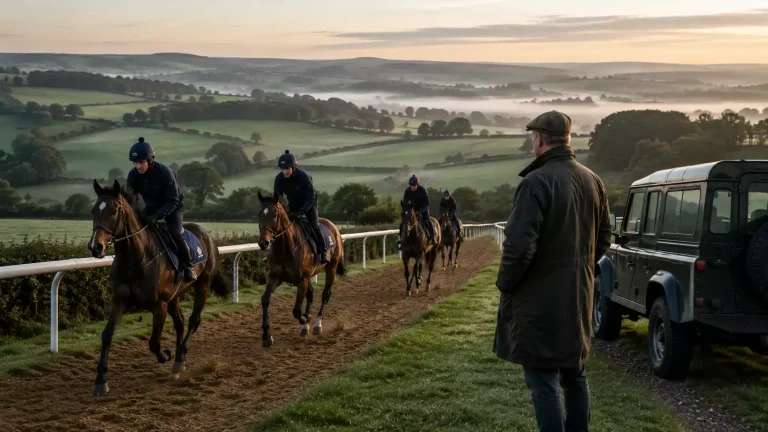
UK rural training yard with horses on the gallops and stable staff at work in the early morning

Economic Impact of UK Horse Racing

British horse racing is more than grandstands and bookmaker counters. It is a full economic chain spanning training yards, breeding operations, racecourse infrastructure, integrity services, equine welfare, regional hospitality and the wider supply of feed, transport, veterinary services and equipment that keeps the sport functioning. The headline numbers are striking – £4.1bn in direct, indirect […]
Read more
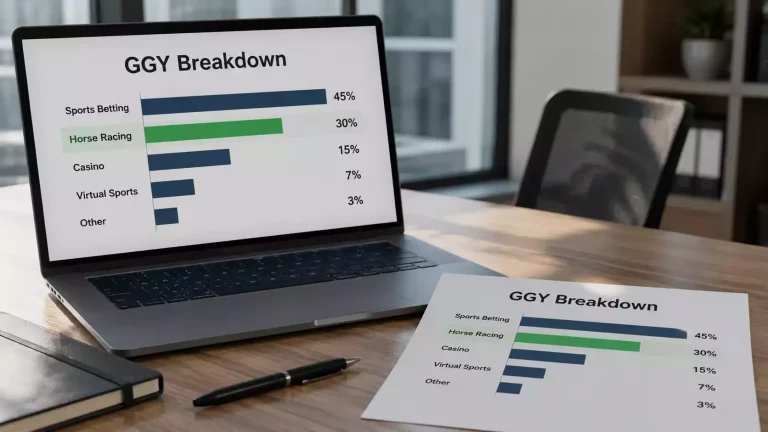
Chart showing UK gambling sector breakdown by GGY with horse racing share highlighted alongside other categories

UK Betting Industry Size: GGY, Turnover and Market Share

The size of the UK horse racing betting market can be measured in three ways – turnover, gross gambling yield (GGY) and levy yield – and each of these metrics tells a different story about the health of the sector in 2024-2025. Turnover is what punters stake; GGY is what bookmakers keep; levy yield is […]
Read more
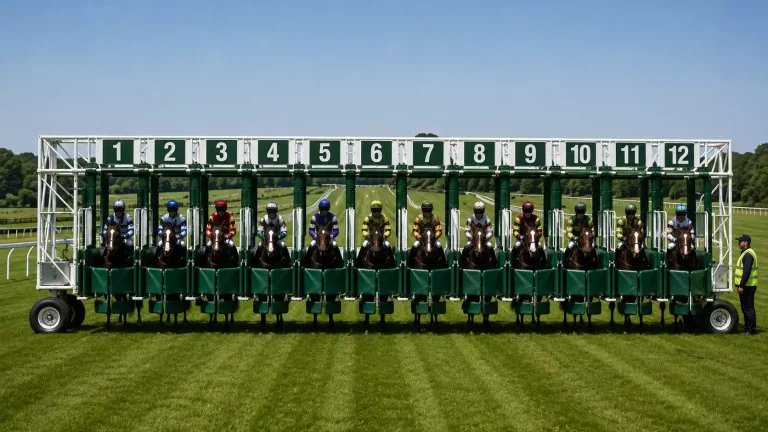
Starting stalls at a UK Flat racecourse showing numbered positions from low to high draws

Draw Bias in UK Flat Racing

Draw bias is the statistically observable advantage that certain starting stall positions enjoy at specific tracks and over specific distances. It is one of the most reliable and most measurable factors in British Flat racing, and at some courses it is strong enough to substantially rewrite your list of fancied horses before a single piece […]
Read more
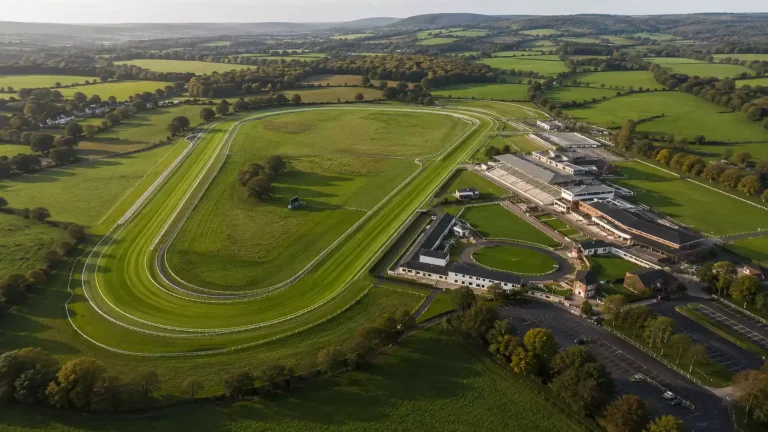
Aerial view of a British racecourse with grandstands, parade ring and the racing circuit in full view

Major UK Racecourses: A Tracks Overview

Britain has 59 racecourses, split between Flat, National Hunt and mixed-track operations, and the variety across that small island is one of the underappreciated features of British racing. Each course has a shape, a surface, a set of cambers, an undulation pattern and a wind exposure that shapes which horses win there and which simply […]
Read more
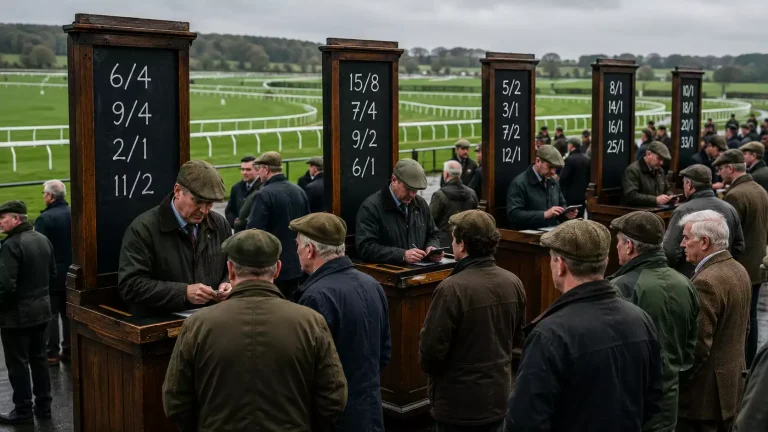
Row of on-course bookmakers chalking prices on boards in the betting ring at a UK racecourse

On-Course Betting at British Racecourses

On-course betting is the historical foundation of the British market. Long before online apps, telephone accounts and starting price returns, the prices that mattered were the ones chalked on boards in the racecourse betting ring – and to a quiet but consequential degree, those prices still set the reference point for everything else. Understanding how […]
Read more
Live racing feed on a punter's screen with in-running prices updating and a horse race in progress

In-Play Betting on Horse Racing

In-play betting on horse racing is unlike in-play betting on almost any other sport. A football match lasts ninety minutes. A tennis set can run an hour. A horse race lasts three to ten minutes, sometimes less, and every betting decision in that window is made under real-time price movement, broadcast delay and physical race […]
Read more
Punter comparing horse racing odds across multiple bookmakers on a tablet with price comparison tool open

Value Betting in Horse Racing: Finding Your Edge

Value is the gap between your assessment of a horse’s true winning probability and the price the bookmaker is offering on it. If a horse should genuinely win 25% of the time but the price implies it will win 20% of the time, that bet has value – mathematically, it has positive expected return, regardless […]
Read more
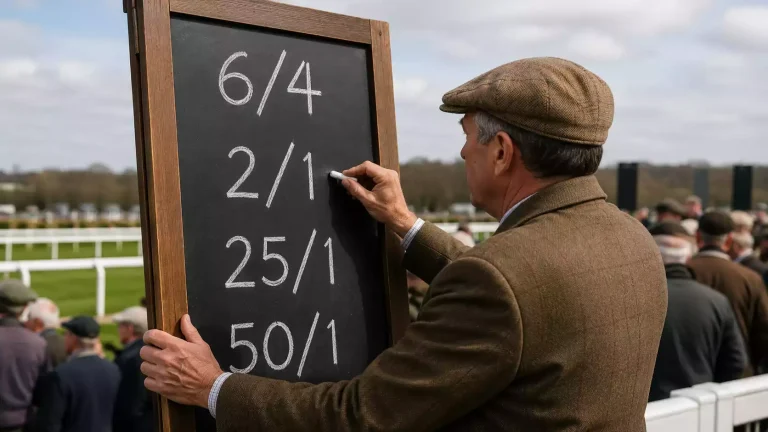
Bookmaker odds board at a UK racecourse showing short-priced favourites alongside long-priced outsiders

Favourite-Longshot Bias in Horse Racing

The favourite-longshot bias is one of the most stubborn empirical effects in the entire literature of sports betting. It says, in plain language, that bets on favourites lose less money over the long run than bets on outsiders – and the gap is wide enough to be visible in any dataset of meaningful size. Both […]
Read more
Punter setting deposit limits on a UK betting account dashboard with GAMSTOP and GamCare logos visible

Responsible Gambling Tools in the UK: GamCare, GAMSTOP and More

Responsible gambling in the UK isn’t a slogan printed in small type at the bottom of a betting advert. It’s a concrete set of tools – deposit limits, time-outs, GAMSTOP self-exclusion and a free national support network through GamCare and BeGambleAware – and knowing where each of these sits is more useful, in the long […]
Read more
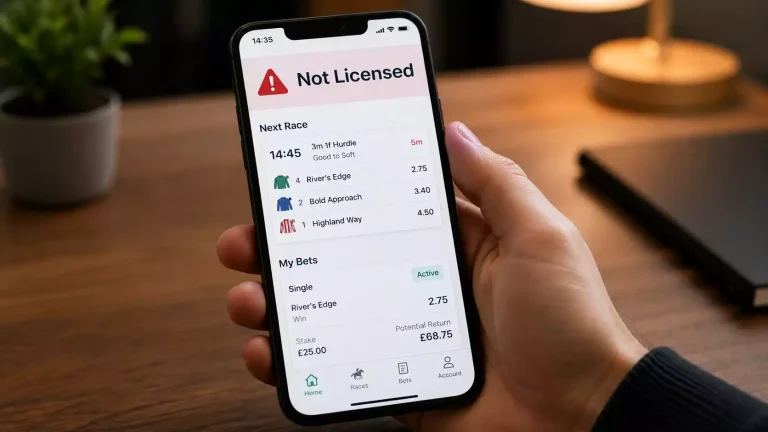
Smartphone showing an unlicensed offshore betting site with warning indicators around the screen

Black Market Betting in the UK: Size, Risks and Signals

The “black market” in UK gambling refers to the segment of offshore, unlicensed operators that serve British customers without holding a UK Gambling Commission licence. These sites don’t pay the Horserace Betting Levy, they don’t apply affordability checks, they don’t comply with UK consumer protection rules, and they don’t contribute a penny to the funding […]
Read more
UK punter completing an online affordability check form on a betting account dashboard

Affordability Checks: What UK Punters Need to Know in 2026

An “affordability check” is a formal procedure required under the UK Gambling Commission’s financial risk framework, by which a betting account is reviewed when monthly deposits cross a defined threshold. The intent is consumer protection – to ensure that punters losing money to gambling can absorb those losses without financial harm. The execution has become […]
Read more
UK bookmaker accounts with the Horserace Betting Levy Board emblem indicating regulated contribution to British racing

Horserace Betting Levy: How the 10% Actually Works

The Horserace Betting Levy is a statutory payment that bookmakers pay on their gross profits from bets on British racing. It is the single mechanism in British law that requires the betting industry to return a portion of its racing-derived income to the sport that generates it. Every prize-money pool, every veterinary research grant, every […]
Read more
Young horses competing in a National Hunt Flat bumper race at a British jumps meeting

Bumpers and Novice Races in National Hunt

A bumper is the only National Hunt race in Britain that doesn’t involve a single fence or hurdle. It’s a flat race contested under jumps rules, designed as an introduction for horses who will later jump but who haven’t yet started their jumping careers. For a punter, bumpers represent the strangest reading challenge in the […]
Read more
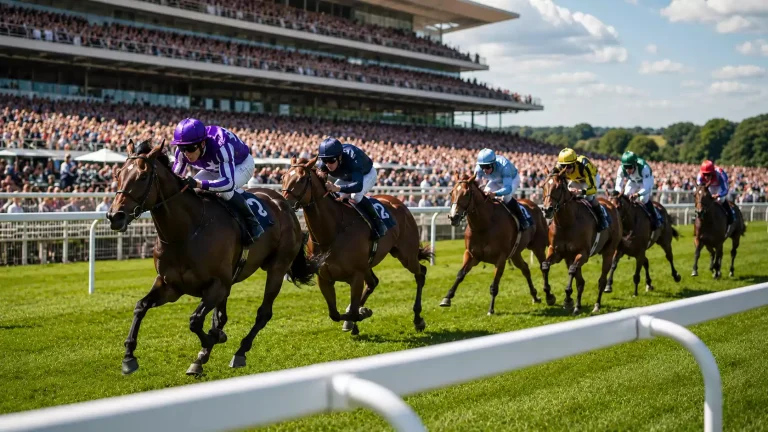
Field of thoroughbreds racing in a Group race at Royal Ascot in front of packed grandstands

Group Races 1, 2 and 3 in UK Flat Racing

Group races are the championship tier of British Flat racing – the elite end of the calendar where horses don’t carry weights set by a handicapper but by the conditions of the race itself, based on age, sex and sometimes previous race wins. They are where reputations are made, where stallion values are settled, and […]
Read more
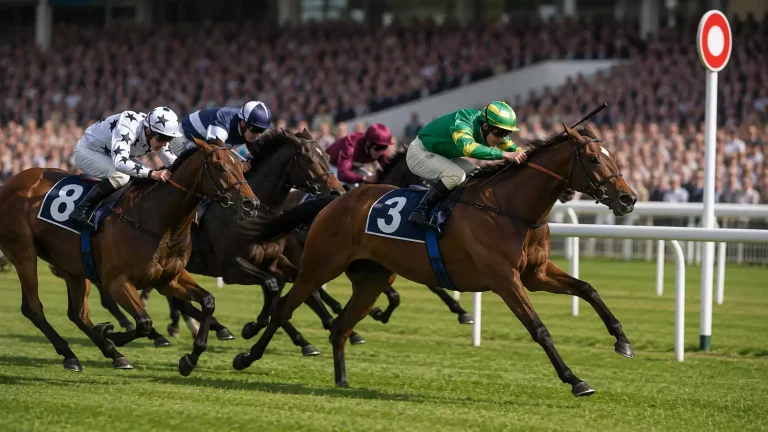
UK handicap race with horses carrying different weights crossing the finish line

Handicap Races in UK Horse Racing Explained

If you watch a single British race meeting, you’ll see more handicaps than any other category. They are the spine of our racing programme – the BHA assigns each horse an Official Rating expressed in pounds, the weight a horse carries scales accordingly, and the theoretical outcome is a finish where all runners cross the […]
Read more
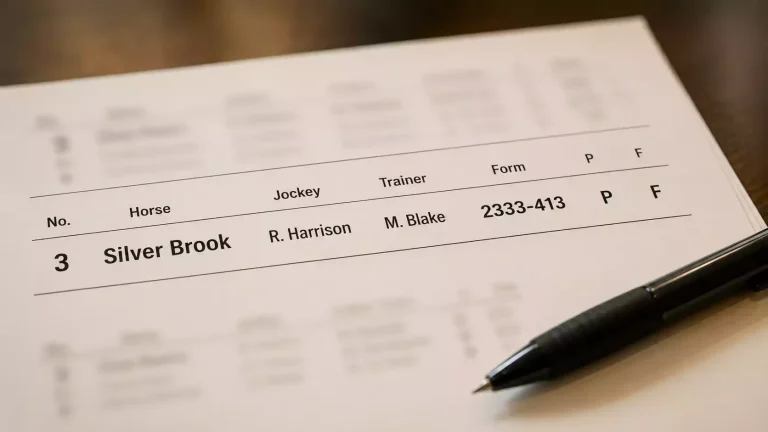
Close-up of a UK racecard showing form figures with numbers and letters next to a horse name

Form Figures and Race Codes Decoded

A string of characters like “2333-413” sitting next to a horse’s name looks like a cipher the first time you see it, but it’s actually one of the densest summaries in all of sport. Six to eight runs of competitive racing, distilled into eight characters, telling you almost everything you need to know about how […]
Read more
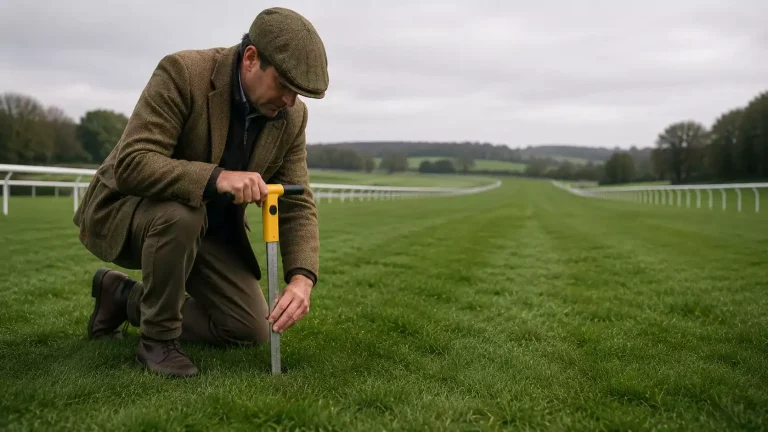
Clerk of the course inspecting the turf with a GoingStick at a British racecourse

Going and Ground Conditions in UK Horse Racing Explained

The word “going” looks deceptively simple on a racecard, but it’s not a mood or a descriptor – it’s a measurable property of the racing surface, and it changes how fast horses can travel, how long they can sustain that pace, and how likely they are to lose their footing. After a decade reading form, […]
Read more
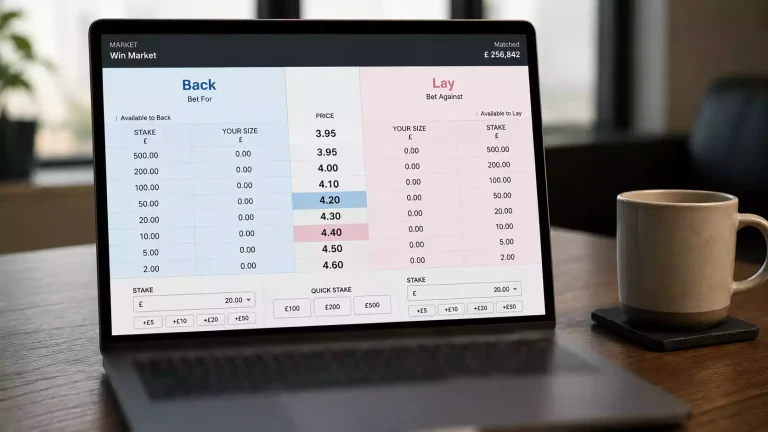
Betting exchange market screen displaying back and lay prices on a UK horse race

Betting Exchanges: Back and Lay Explained

Where You Become the Bookmaker The first time I laid a horse on a betting exchange I felt like I had just handed someone the keys to my house. The price was 8/1, the field was a competitive 12-runner handicap, and I had decided that the favourite was overpriced and would not win. I laid […]
Read more
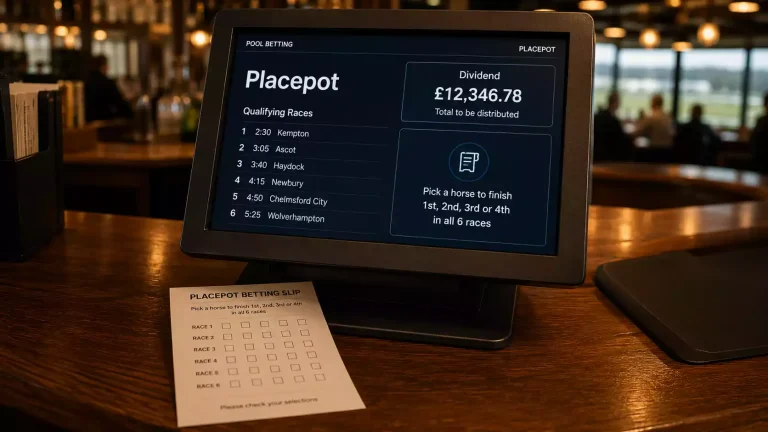
Tote pool betting terminal at a UK racecourse displaying Placepot dividend

Tote Bet, Placepot, Jackpot and Scoop6

Pool Betting Plays a Different Game The first time I won a Placepot it was for £170 on a £2 stake at Newmarket on a cold Tuesday in November. I had been there since the first race, working through racecards in the bar, and when the sixth race result confirmed my last horse had finished […]
Read more
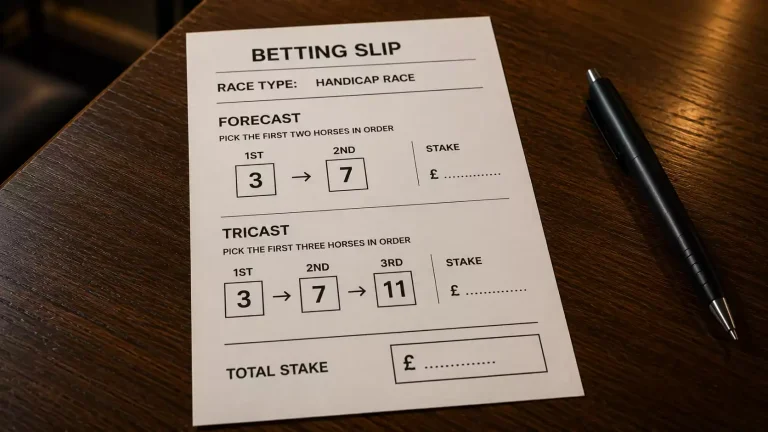
Bet slip showing a straight forecast and tricast pair on a UK handicap race

Forecast and Tricast Bets in UK Horse Racing

The Hardest Singles in the Book A friend who has been punting for thirty years has a simple rule: he will not place a forecast unless he has been to the parade ring and watched the two horses walk. Not seen them on TV – watched them in person. Until you appreciate just how hard […]
Read more