
Casinos Without a UK Licence: What It Means
Best Horse Racing Betting Sites – Bet on Horse Racing in 2026
 Available in US
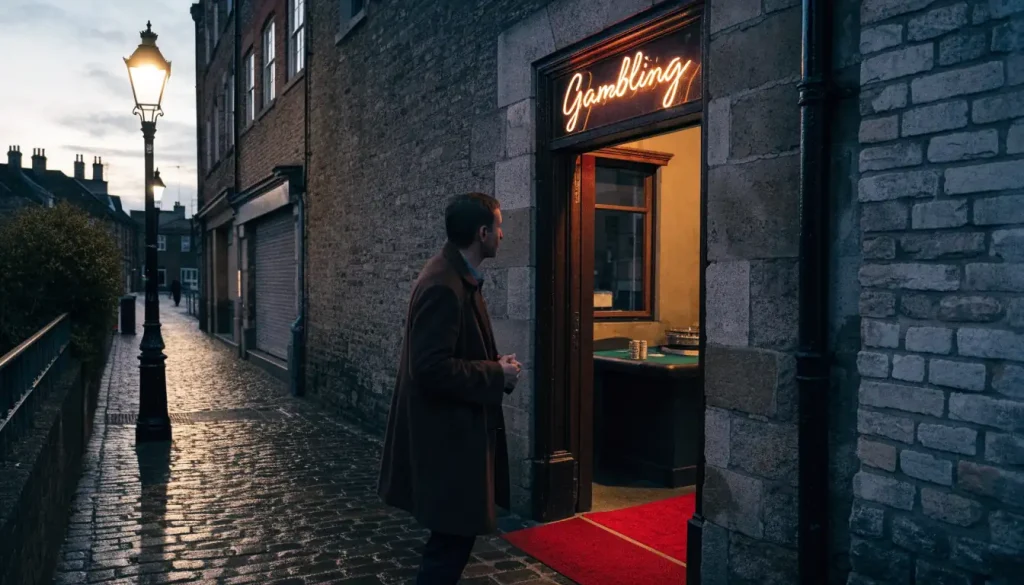
A licence from another jurisdiction does not place a casino under UK Gambling Commission oversight or make it UK-regulated.
What “Without a UK Licence” Actually Means
When a casino is described as operating without a UK licence, the phrase is about who regulates it. A non-UK-regulated casino operates without oversight from the UK Gambling Commission. The label does not describe a particular kind of game, website design or payment method. It describes the casino’s regulatory position.
I used to read “foreign” as though it meant one clear thing: a site based somewhere else. That shortcut is unreliable. The more useful distinction is whether the casino falls under UK Gambling Commission oversight or under a regulator in another jurisdiction. A site may be associated with a non-UK regulator, but that alone does not make it UK-regulated.
A licence can come from elsewhere
Non-UK-regulated casinos may be licensed by authorities in places including Malta, Curaçao, Gibraltar and Anjouan. Those names refer to different jurisdictions; they are not different labels for a UK licence. So when you see a casino described as licensed in one of those places, you are looking at a claim about its connection to that jurisdiction, not evidence of UK Gambling Commission oversight.
That distinction is easy to lose in casino advertising. A licence badge can look official, and the word “licensed” can sound like a complete answer. It isn’t. The relevant question is which authority the badge refers to. I’ve learned to pause there rather than let a polished footer do the thinking for me.
“International” is another word that can blur the picture. It may be used to describe a site’s reach or identity, but it does not tell you, by itself, which regulator oversees the casino. Likewise, “non-UK licensed” is a broad description, not the name of one single regulator or licensing system. The actual jurisdiction matters if you are trying to understand what the wording means.
What the label does—and doesn’t—tell you
An online casino without a UK Gambling Commission licence is not automatically a casino with no licence at all. It may hold a licence issued elsewhere. Conversely, seeing a foreign regulator named on a site does not turn that site into a UK-regulated casino. The terms are describing separate things: the authority named on the site and whether UK Gambling Commission oversight applies.
Curacao casino licence in the UK: what it means
That is why phrases such as “casino without a UK licence” can cover a mixed category. Two sites may both sit outside UK Gambling Commission oversight while presenting different licensing jurisdictions. The shared label tells you what they do not have in common with a UK-regulated site; it does not establish that their licences are identical or that the operators are alike.
Nor does “new casino without a UK licence” identify a special regulatory category. “New” describes the site’s age or recent arrival, while the licence wording describes its regulatory status. Putting those ideas together does not tell you more about the regulator than the licence information itself does.
The same goes for someone looking for the “best” casino without a UK licence. That phrase can make the category sound like a neat shelf of comparable options. In reality, the wording groups together sites that may point to different licensing jurisdictions. The phrase alone cannot tell you which authority is named, or make one site equivalent to another.
Read the regulator name, not just the badge
When I see a licence claim, I look for the regulator’s name in the wording rather than stopping at a badge or a broad description. Malta, Curaçao, Gibraltar and Anjouan are examples of jurisdictions associated with licences used by non-UK-regulated casinos. Naming one of them narrows down what the casino is claiming; it does not make the claim interchangeable with UK Gambling Commission oversight.
It also helps to keep three descriptions separate in your head: where a casino is based, which jurisdiction is connected to its licence, and whether the UK Gambling Commission oversees it. People often fold these into a single idea of “where the casino is from”. That can make a site’s marketing sound clearer than it is.
So, in plain terms, a non-UK-regulated casino is an online gambling site outside the UK Gambling Commission’s oversight. It may identify a regulator elsewhere, including one in Malta, Curaçao, Gibraltar or Anjouan. That is what the label sets out. No more than that.
Non-UK Regulated Casinos
A non-UK-regulated casino is an online gambling site operating outside the oversight of the UK Gambling Commission, though it may hold a licence from jurisdictions such as Malta, Curaçao, Gibraltar, or Anjouan.
Top online casinos in the UK
- x3betBonus: Welcome Pack 100% Up to £1.000 + 200 Free Spins · Payout speed: 1-3 business days
- JetsetspinsBonus: 200% Bonus + 100 Free Spins + Free Royal Wheel · Payout speed: 1-3 business days
- SpinFormulaBonus: 550% Up To £15,000 + 550 FS · Payout speed: 1-3 business days
- DieselwinBonus: Welcome Pack 250% up to £4000 + 200 FS · Payout speed: 1-3 business days
- BeOnBetBonus: 100% up to €500 + 100 FS · Payout speed: 1-3 business days
- ZombillionBonus: Welcome Pack 250% up to £4000 + 200 FS · Payout speed: 1-3 business days
The Legal Position for Players in Great Britain
The key distinction is who the law is aimed at. The Gambling Act 2005 places the licensing obligation on operators that supply gambling services to the British market. A remote casino serving customers in Great Britain needs a licence from the UK Gambling Commission, wherever the business itself is based. A licence issued elsewhere does not replace that requirement.
That is the operator’s position. It is not the same question as whether an individual player commits an offence by using a site that lacks a UK licence. British law does not make players criminally liable simply for gambling on an unlicensed site. Nor does it expressly forbid British citizens from using gambling services licensed in another country.
Those points can sound like a green light if they are squeezed into a headline. They are not. The absence of a criminal offence for the player does not turn an unlicensed casino into an authorised service for Great Britain. The operator’s obligation remains, and the legal status of the site must not be confused with the player’s exposure to prosecution.
I used to mash those two ideas together: “I won’t be prosecuted” became “the site must be fine”. That leap is where the wording gets slippery. Personal criminal liability and an operator’s right to serve a market are separate matters. One does not settle the other.
So if you see a casino described as operating without a UK licence, read that as a statement about its regulatory status in Britain, not as proof that it is permitted to target British customers. The requirement applies regardless of whether the company is based in Britain or overseas. A foreign licence may exist, but it does not satisfy the UK licensing rule for an operator serving Great Britain.
Online casinos with no sister sites in the UK explained
There is also a difference between what the law explicitly says about players and what follows from the operator’s licensing duty. A player’s lack of criminal liability is not an endorsement, a guarantee of access to legal protections, or confirmation that the operator is compliant. It says something narrower: the player is not committing a criminal offence merely by gambling on an unlicensed site.
That narrow distinction matters when searching for a casino without a UK licence. The phrase can make the situation sound like a personal choice between equivalent options. It is not equivalent from the legal standpoint: a properly licensed operator serving Great Britain must hold the relevant UKGC licence, while an operator without one is outside that requirement. The fact that a player may not be prosecuted does not change the operator’s obligation.
In everyday terms, keep the two questions apart. Is the operator authorised to provide gambling services to customers in Great Britain? That is governed by the licensing requirement. Does a player commit a criminal offence merely by using an unlicensed site? No. Both statements can be true at once.
I would not collapse that into “it’s legal, then”. That phrase hides the operator’s separate responsibility and can leave you with the wrong impression about what a foreign licence means. The careful reading is less dramatic: the law targets the operator supplying the service, while it does not impose a criminal offence on the player simply for gambling there. Different sides of the same transaction. Don’t blur them.
A Non-UK Casino Is Not the Same as a UKGC-Licensed One
A licence badge can look reassuring, but the important question is who issued it. A non-UK-regulated casino operates without oversight from the UK Gambling Commission (UKGC). It may hold permission from another jurisdiction, but that does not make it UKGC-licensed. Those are separate regulatory statuses, not interchangeable descriptions.
Regulatory Difference
A licence from a foreign jurisdiction does not make a casino UKGC-licensed and does not provide the same regulatory protections or supervision as the UK Gambling Commission.
I used to skim the footer, spot the word “licensed” and take it as a general sign that a site had been checked to the same standard as a UK casino. That was a mistake. A licence from somewhere else tells you about that regulator’s authority over the operator; it does not show that the UKGC supervises the casino.
For customers in Great Britain, UKGC licensing is tied to the operator’s activity in the British market, not simply to where its office or website is based. An operator serving customers here needs the relevant UKGC licence regardless of its location. So a casino does not become UKGC-licensed because it has a British-facing website, accepts British customers, or displays a foreign licence badge. The badge cannot be stretched to mean more than it says.
That distinction matters when a site describes itself as “regulated” without making clear by whom. I now treat those words as incomplete until I can identify the regulator and the scope of the licence being claimed. If the operator is licensed elsewhere, the accurate description is that it is licensed by that jurisdiction—not by the UKGC. If it has no UKGC licence, it should not be presented as a UKGC-regulated casino.
The difference is not just vocabulary. UKGC-licensed operators are subject to requirements that do not automatically apply to a non-UK-regulated casino. Responsible-gambling and data-protection rules may be less stringent at the latter. Players using an offshore casino also do not have access to the UK’s Financial Ombudsman Service or the mandatory responsible-gambling tools that apply in the UK-regulated system. That is a practical difference, not a technical footnote.
Online Casino No Registration UK: What It Means
A foreign licence may still matter: it identifies a regulator the operator says oversees it. But it does not establish UKGC oversight, and it should not be used as a substitute for it. When I see “licensed casino” in promotional copy now, I look for the exact licensing claim rather than filling in the reassuring version myself.
Plainly put: a non-UKGC casino is outside the UKGC’s supervision. A licence from another place does not change that. If you are comparing sites, keep those labels separate; otherwise, “licensed” can sound like a promise of UK protections that the operator is not offering.
Non-UK Sites, Explained Without the Sales Pitch
A non-UK casino is not simply a site with a foreign-sounding name or a website hosted somewhere abroad. The useful distinction is regulatory: a non-UK-regulated casino operates without oversight from the UK Gambling Commission. Its operator may hold a licence from another jurisdiction, but that does not make the site UKGC-regulated.
That difference is easy to blur when a casino advertises a licence badge. I used to read a badge as a general stamp of approval. It isn’t. It tells you something about the operator’s claimed regulatory status; it does not, by itself, tell you that the operator is authorised to serve customers in Great Britain.
A non-UK-based online casino may be licensed in places such as Malta, Curaçao, Gibraltar or Anjouan. Those are different jurisdictions, with their own licensing arrangements. So “licensed abroad” is not one uniform status, and it should not be treated as interchangeable with holding a UK Gambling Commission licence.
Do
- Distinguish between where an operator is based and who licences them
- Check if the operator holds the specific UK licence required to serve Great Britain
Don’t
- Assume an “offshore” base implies legal permission to target the UK market
- Treat a foreign licence badge as proof of UKGC regulation
Where the operator is based is only part of the picture. A company can be based outside the UK and still fall under the UK licensing requirement if it serves customers in Great Britain. The rule turns on the market the operator serves, not simply the address on its website or where its business is located. Operators serving customers in Great Britain need a UK Gambling Commission licence regardless of their base.
That is why “offshore” can be a misleading shortcut. It describes a location or business setup, not permission to offer gambling in a particular market. A site might display a foreign licence and still not have the UK authorisation required to serve Great Britain. The badge and the market permission are separate questions.
When I look at a site’s description, I try to separate three things: where the operator is based, which authority it says licenses it, and whether it holds the UK licence required to serve Great Britain. If those details are blurred together in the sales copy, that is not clarity. It is just a tidy-looking badge doing too much work.
The label “non-UK casino” can therefore cover quite different operators. The shared point is that they are outside UKGC oversight; the jurisdiction named on a licence is a separate detail. Don’t read a foreign licence as proof of UK regulation, or an overseas base as proof that the operator may serve British customers. Those are different claims. Distinguish them before you take the site’s wording at face value.
Outside UKGC Regulation: What You Give Up
A casino outside UKGC regulation may look familiar on screen, but the protections behind it can be different. I used to treat a licence badge as a kind of safety net. It isn’t one: what matters is which regulator oversees the operator and what that regulator requires.
UK online casino payout rates: how RTP works
Non-UK-regulated casinos may apply less demanding standards for responsible gambling and data protection than UKGC-licensed operators. That can mean fewer safeguards for controlling gambling and less certainty about how your personal information is handled. Don’t assume that tools or protections you expect from a UK-licensed site will be available elsewhere.
There is a practical difference if something goes wrong, too. If you play with an offshore operator, you do not have access to the UK’s Financial Ombudsman Service for a dispute with that casino, or to the UK’s mandatory responsible-gambling tools. You also cannot use the UK Gambling Commission’s complaint process as though the operator were under its oversight. You’re dealing with the operator and whatever complaint arrangements it provides.
That matters when a disagreement is about more than a small inconvenience. If you think a decision was unfair, a UK route for escalating the complaint may not be open to you. The operator’s own process may be the only one available, and its existence does not make it equivalent to independent UK oversight.
I’d look beyond the badge and ask what help is actually available: how the operator handles complaints, what safeguards it offers, and what its privacy terms say. Even then, checking those details does not recreate the protections attached to a UKGC licence. There is no UK backstop.
This is not a claim that every non-UK-regulated casino behaves badly. It is a reminder that the regulatory gap changes what you can rely on if you need support. If those protections are important to you, a site outside UKGC regulation is not a like-for-like substitute.
Regulatory Gap
Using a casino outside UKGC regulation means you lose access to the UK’s Financial Ombudsman Service and mandatory UK responsible-gambling tools.
Anjouan Licences: Check the Limits Before You Trust the Badge
Anjouan can appear on a casino’s licence badge, but that badge has a boundary. An Anjouan casino licence does not authorise an operator to serve customers in the United Kingdom or in other markets it lists as restricted. So if a site points to Anjouan as proof that it may offer gambling to people in Britain, that is not what the licence establishes.
I used to treat a licence logo as a quick answer: see a regulator’s name, assume the important checks had been done. That shortcut misses the key question: what does this particular authority actually oversee, and where may the operator offer its service? A licence issued by Anjouan does not replace the permission required to serve a market where separate authorisation is needed.
The limits matter when something goes wrong, too. The Anjouan authority does not take up player complaints, mediate disputes or decide who is right. That is different from an independent dispute-resolution route comparable to the services associated with UK Gambling Commission-approved operators. An Anjouan-licensed casino is not required to provide that equivalent route.
There is a complaints rule for the operator itself: under Anjouan’s framework, it must respond to a complaint within 30 calendar days. But a response from the casino is not the same thing as an independent decision. If you and the operator disagree, the authority does not step in to adjudicate the case. That distinction is easy to miss when a badge and formal-sounding rules make a site look more reassuring than the remedy actually available.
Anjouan-licensed casinos are also not required to integrate GAMSTOP. That point is about the limits of the licence; it does not mean the licence itself provides a British self-exclusion safeguard. The details of how GamStop works are a separate matter.
Before relying on an Anjouan casino licence, check what the operator says it covers and whether the site is authorised to serve your market. A badge alone cannot answer that. Nor should you treat it as a promise that an outside body will resolve a dispute for you.
That’s the limit.
Not on GamStop Means Not Part of GamStop
GamStop is a UK self-exclusion scheme, not a universal block on gambling websites. Casinos outside it are not enrolled in the scheme, so registering with GamStop does not mean every online casino will be prevented from opening its pages or accepting an account. That distinction matters: a self-exclusion tool can only work with the operators that participate in it.
I used to think “self-exclusion” meant I had shut the door on gambling full stop. It does not. It applies within the scheme’s reach. If a site is not part of GamStop, you should not assume your registration will stop you from visiting it, signing up or gambling there. That is not a loophole that makes the site safe; it is a limit of what the scheme covers.
What “not on GamStop” actually tells you
The phrase describes a relationship to the scheme: the casino is not part of the UK Gambling Commission’s self-exclusion system. It does not tell you that the site is a UK casino, that GamStop has checked it, or that it provides an equivalent exclusion process. Nor does “not on GamStop” mean that the operator can see your GamStop registration and will automatically refuse you. The scheme is not a general warning label shared across every gambling site.
What “not on GamStop” means
It indicates the casino is not part of the UK Gambling Commission’s self-exclusion system. It is not an alternative safety standard, nor does it mean the operator automatically recognizes your GamStop registration.
That is why terms such as “online casino not on GamStop” can sound more reassuring than they are. They identify an absence from the scheme, not an alternative safety standard. The same applies if a site is described as one of the “best” non-GamStop casinos: that phrase is a ranking claim, not evidence that the operator can honour the protections you may have expected from GamStop. I would not treat it as a reason to test the boundary.
If you have self-excluded, don’t treat access as permission
A block that does not apply everywhere can create a dangerous impression: if a casino lets you through, perhaps your exclusion no longer matters. It still matters. The fact that a site is accessible does not cancel the decision you made when you self-excluded, and it does not turn gambling there into a controlled extension of GamStop.
If you registered because gambling was becoming difficult to manage, seeking out a casino that is outside the scheme works against the purpose of that decision. I know how quickly “just checking” can turn into a deposit. The important point is not whether a particular site happens to load; it is whether using it undermines the barrier you chose to put in place.
A casino not on GamStop should therefore not be presented as a workaround for someone who has self-excluded. That framing turns a gap in coverage into an invitation. I won’t do that. If you are looking for a way to gamble despite an active exclusion, take that as a reason to pause rather than as a cue to compare sites or offers.
What protection the scheme cannot provide there
Because these casinos are not part of GamStop, the scheme cannot enforce your self-exclusion with them. You also forfeit access to the UK’s Financial Ombudsman Service and to mandatory responsible-gambling tools when gambling at offshore casinos. Those are practical consequences, not small-print distinctions.
In particular, do not assume that a site will apply the same responsible-gambling measures simply because it has a “responsible play” page or offers an account setting. A label on a website is not proof that it is connected to GamStop. And an operator’s own process, if it offers one, is not the same thing as being part of the UK scheme.
This is the part I would want made plain before anyone follows a recommendation: “not on GamStop” does not mean “GamStop, but under another name”. It means the UK scheme does not cover that casino. If you are relying on self-exclusion to keep gambling out of reach, that difference is decisive.
Don’t confuse search labels with safeguards
People may look for casino sites not on GamStop, or for MGA- or Curaçao-licensed casinos not on GamStop, hoping that a licence label will answer a different question. It does not change the central point here: being licensed somewhere else does not make a casino part of GamStop. A licence and participation in a self-exclusion scheme are separate matters.
Likewise, a non-GamStop casino bonus has nothing to do with whether your exclusion applies. A promotion cannot restore GamStop coverage, and it should not be allowed to distract from why you registered in the first place. I have learned that advertising makes access feel like an opportunity. Sometimes it is simply access.
Self-Exclusion Limit
Attention: If you have self-excluded, do not treat a casino’s accessibility or its lack of GamStop enrollment as permission to gamble, as it undermines the barrier you chose to put in place.
If you have excluded yourself, don’t use the scheme’s limits as a route around your own boundary. Casinos not on GamStop are outside it. That’s the whole point.
New Offshore Casinos: The Operational Risks Behind the Launch
A new site can look finished before its day-to-day processes have been tested by many customers. That does not prove an operator will cause problems, but it does mean a polished homepage tells you very little about what happens when an account is reviewed or a withdrawal is requested. I’ve learned not to mistake “new” for “easy to deal with”.
The same caution applies when people compare new offshore casinos in the UK. A site may be newly launched, newly noticed, or simply newly promoted; those are not the same thing. And a new name does not change its regulatory status. If an operator is serving customers in Great Britain, it needs a UK Gambling Commission licence. A non-UK-regulated casino does not become authorised here just because it has opened recently.
Verification can become a moving target
Identity checks are a normal part of gambling accounts, but the practical concern is when the operator asks for documents, or more documents, at the point you want to withdraw. You might be asked to prove who you are, where you live, or how an account is being used. The important thing is not to assume that completing the first check means no further review can happen.
Some specialist reviews have reported offshore operators asking for notarised documents or a video call before releasing a withdrawal. That is a reported possibility, not a standard process I would assume every site uses. Still, it shows why a vague promise of “quick verification” is worth little unless the operator explains what evidence it may request and how it handles a review.
If a request arrives only after you have tried to cash out, the timing can feel especially uncomfortable. Keep copies of what you submit and note what the operator says is still needed. Don’t send sensitive documents through a channel you cannot verify as belonging to the operator. And if the requirements keep changing, treat that as a reason to pause rather than as a challenge you must push through.
Withdrawal limits can change the shape of a win
A large balance is not necessarily available as one withdrawal. Some specialist reviews have described non-UK-regulated casinos setting daily, weekly, or monthly withdrawal limits, with larger wins paid in instalments. That is not a rule that applies to every operator; it is a policy possibility to look for in the terms before you deposit.
The distinction matters. A site can let you build a balance while its rules allow only part of that balance to be requested at a time. If the limit is unclear, or the operator can change how it applies, you may have little practical certainty about when the full amount would reach you. I would read the withdrawal conditions as closely as the game rules, not as small print for later.
For a newer operator, published terms are only part of the picture. You cannot tell from a fresh design how consistently support handles account reviews, whether explanations stay consistent, or how a dispute over a withdrawal will be treated. A support agent’s confident tone is not the same as an enforceable promise.
Reviewing New Casinos
- Locate clear terms covering identity verification
- Check for daily, weekly, or monthly withdrawal limits
- Identify which documents are required for withdrawals
- Review the operator’s specific process for handling disputes
Check the process before there is a balance
Before creating an account, look for clear, accessible terms covering verification and withdrawals. Check whether the operator explains what documents it may request, whether limits apply, and what happens if a review takes longer than expected. If those details are missing or contradictory, you have no good reason to assume the answer will be clearer once money is involved.
This is not a way to identify a “safe” new site. It is a way to spot uncertainty before you take it on. Offshore casinos not on GamStop sit outside that scheme, and the practical experience can depend heavily on the operator’s own procedures. A new launch may have little history to judge those procedures by.
I’d rather walk away from unclear terms than discover their meaning while waiting for a withdrawal. That’s the bit that matters.
How Payments and Withdrawals Can Work Offshore
“No Deposit” Bonuses Still Come With Strings
A “no deposit” offer sounds like free cash. It isn’t safe to treat it as money you can withdraw the moment it lands in your account. The offer may be bonus credit or free spins, and the terms decide what happens to any winnings.
The line I look for first is the wagering requirement: how much play is required before winnings become eligible for withdrawal. A specialist review of offshore offers cited welcome bonuses with requirements of 35 times the bonus or more. That is a reported example, not a rule for every casino not on GamStop, but it shows why the headline claim tells you very little.
Free spins can have separate conditions. One specialist review reported requirements of 30 to 50 times the winnings, alongside withdrawal caps ranging from £5 to £50. Those figures are not universal; the terms attached to the particular offer are what matter. Check whether the requirement applies to winnings, bonus credit, or another combination, and whether a cap limits what you can take out.
Then check expiry rules, eligible games and any maximum cash-out condition. If the wording is unclear, don’t assume the most generous interpretation. “Free” can mean you get a chance to play, not that the resulting balance is yours to keep.
I used to skim these details and focus on the bright number on the offer. Wrong order. Read the full terms before accepting, and save a copy while the offer is available. If you cannot tell what you must do to withdraw winnings, the sensible move is to leave the bonus alone.
Choosing Not to Gamble Is the Only Way to Avoid These Risks
When you look for a “best” non-GamStop casino, it is easy to treat a polished site or a generous offer as evidence that you will be looked after. I’ve made that mistake: the welcome looked simple, while the important conditions sat elsewhere. A confident first impression tells you little about how a dispute or a difficult withdrawal will be handled.
At a non-UK-regulated casino, responsible-gambling and data-protection standards may be less demanding than those imposed on UKGC-licensed operators. You may also lose access to UK protections, including the Financial Ombudsman Service and mandatory responsible-gambling tools. That matters most when you need help setting limits, protecting your information or challenging a decision. It is not a small-print detail.
Casinos & Safety: UK Licensing and Account Checks
Terms deserve the same scepticism. Read what the operator says about withdrawals, verification and account restrictions before depositing, and keep a copy of the applicable terms. Even then, understanding a condition does not make it fair or guarantee that a disagreement will be resolved in your favour. A “fast payout” label is just a claim until your own money is involved.
My mistake was thinking that careful browsing could remove the underlying uncertainty. It can help you spot warning signs; it cannot give a non-UK-regulated site UK safeguards or a UK complaint route. If gambling is starting to feel hard to control, stepping away is more useful than trying to find a supposedly safer site.
Not gambling is the only sure way to avoid losing money or facing these particular account and withdrawal risks. That is not a clever workaround. It is the plain answer.
Is it legal for a UK player to gamble at an Anjouan-licensed casino?
You do not commit a criminal offence under UK law simply by gambling there. But an Anjouan licence does not authorise the casino to serve customers in Great Britain; operators doing so need a UK Gambling Commission licence.
Are sites that are not on GamStop legal for players in the UK to access?
You are not committing a criminal offence simply by using one. However, sites not on GamStop are outside the UK Gambling Commission’s self-exclusion scheme, and operators serving customers in Great Britain require a UKGC licence.
How do casinos outside GamStop operate?
They operate outside the UK Gambling Commission’s self-exclusion scheme, so they are not required to integrate GAMSTOP. An offshore licence, such as an Anjouan licence, does not authorise an operator to serve customers in Great Britain.
Casinos
Created by the "" editorial team.