
Responsible Gambling Tools in the UK: GamCare, GAMSTOP and More
Best Horse Racing Betting Sites – Bet on Horse Racing in 2026
 Available in US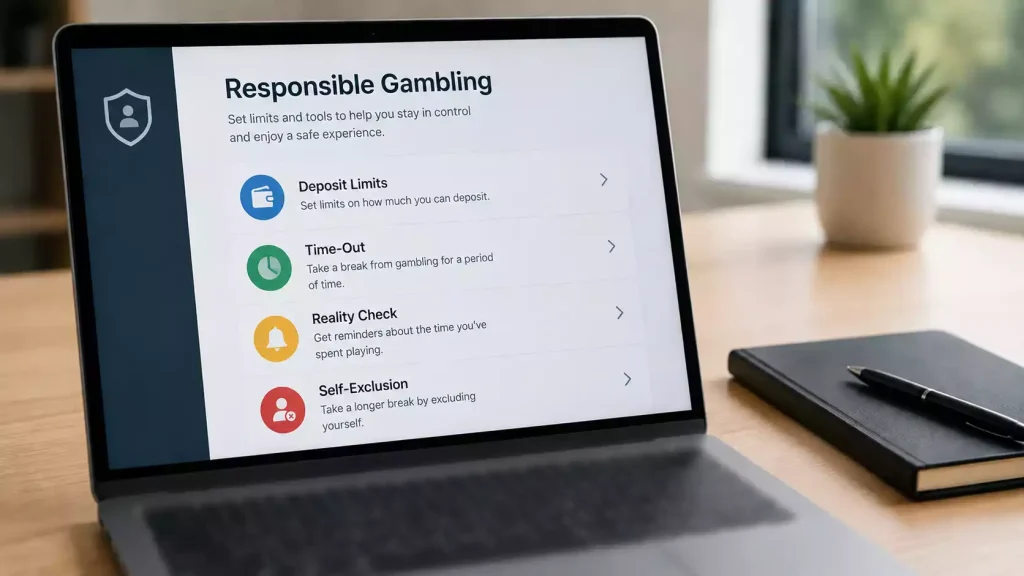
Responsible gambling in the UK isn’t a slogan printed in small type at the bottom of a betting advert. It’s a concrete set of tools – deposit limits, time-outs, GAMSTOP self-exclusion and a free national support network through GamCare and BeGambleAware – and knowing where each of these sits is more useful, in the long run, than knowing the form of any favourite. Every UK-licensed bookmaker is required to offer the operator-level tools and to display links to the national services. Most punters never use them. The minority who do, use them at the moment they matter most.
I’ve watched friends discover these tools five years too late. The pattern is always the same: the friction was light when it could have helped, the punter didn’t engage with it, the betting went where the betting was always going, and by the time the support network was relevant the loss had already happened. The tools work best as preventative architecture, not as crisis intervention – and treating them that way is one of the genuinely useful pieces of betting discipline you can install in your account on a Sunday afternoon, before you need them.
The regulator behind those tools: UK betting regulation.
Deposit and Loss Limits at Operator Level
I set my first deposit limit after a three-week run during the Cheltenham Festival where my staking had gradually crept up without me really noticing. It took ninety seconds on the bookmaker’s dashboard and saved me, conservatively, about £400 over the next quarter. The tool is unglamorous and the operator never reminds you it exists, but it is the single most effective preventative measure available to a UK punter.
Every UK-licensed bookmaker must offer customers the ability to set daily, weekly and monthly deposit limits. Once set, the limit is enforceable – the operator cannot accept deposits above the chosen amount within the chosen window. Increases to the limit are subject to a cooling-off period of 24 hours, which exists specifically to prevent reactive limit-raising during a losing run.
Loss limits work on the same principle but apply to net losses rather than gross deposits. A £500 weekly loss limit means the operator will block further bets in that week once your net loss has reached the cap. Loss limits are arguably the more useful of the two, because they capture what actually matters to your financial position rather than just what you’ve moved into the account.
The limits operate per-operator, not across the industry. A punter who hits a deposit limit at one bookmaker can simply move to another, which is one of the reasons the system has been criticised. The Gambling Commission has consulted on cross-operator limit aggregation, but as of 2026 the per-operator structure remains the default.
The data on who uses these tools is sobering. Surveys of regular punters consistently show that fewer than one in ten has set a meaningful deposit or loss limit, even though setting one takes about a minute and has no downside beyond the friction of having to wait 24 hours to raise it. The tool is available; the take-up is the issue.
Time-Outs and Cooling-Off Periods
A time-out is a temporary self-imposed lockout from a betting account. UK-licensed operators must offer time-outs ranging from 24 hours up to six weeks, and the customer can activate the function at any time without justification or notice.
The use case is specific. Time-outs are designed for short-term recovery – a bad weekend, an emotionally charged decision, a need to step back from a particular meeting without committing to a longer exclusion. The account is locked for the chosen window, deposits are blocked, and the operator cannot send marketing communications during the period.
Cooling-off periods sit on a related but distinct lever. After certain trigger events – typically a series of failed deposit attempts or a customer-initiated query about gambling harm – the operator may impose a short cooling-off automatically, preventing further bets for a set time. This is the operator side of the protective architecture, complementing the customer-initiated time-out.
The advantage of time-outs over self-exclusion is reversibility on a defined timeline. A six-week time-out ends after six weeks regardless of what the customer wants in week three, which removes the temptation to abandon the decision impulsively. Many regular punters use rolling time-outs around big race meetings as a structural discipline – locking the account for two weeks after a tilt-inducing day rather than continuing to chase.
The full picture is in our guide to UK horse racing betting basics.
GAMSTOP and Self-Exclusion
GAMSTOP is the national self-exclusion register for the UK. It is operated by an independent body funded by the regulated gambling industry, and it provides the only mechanism in the UK that delivers self-exclusion across all licensed operators simultaneously.
Registration with GAMSTOP requires a single online form. Once registered, the customer is excluded from every UK-licensed online operator for the chosen period – six months, one year or five years. The exclusion is real: licensed operators are required to block the account, refuse new registrations from the same identity, and prevent marketing communications from reaching the customer. The legal force behind GAMSTOP is the licensing condition imposed by the Gambling Commission, which means non-compliance by an operator is a regulatory breach.
What GAMSTOP does not do is cover unlicensed operators. A punter who self-excludes through GAMSTOP can still find unlicensed offshore sites willing to take their custom. This is one of the reasons the offshore market has been a particular concern for harm-reduction policy – the protective architecture of GAMSTOP only works inside the regulated perimeter, and the growing unlicensed segment of the UK market sits outside that perimeter.
The data on GamCare callers – the helpline associated with gambling-related distress – paints a sharp picture of why GAMSTOP and the broader self-exclusion infrastructure matter. In its 2023-24 annual report, GamCare reported that 67% of callers said they had debts arising from gambling, and 76% reported financial hardship more broadly. Those callers were, almost without exception, deep into harm before they made contact. GAMSTOP exists to give people an off-ramp that doesn’t require them to be at the point of crisis.
The decision to register with GAMSTOP is not reversible during the chosen exclusion period. A customer who self-excludes for one year and changes their mind after three months cannot un-exclude themselves – they must serve the full period. This irreversibility is the feature, not the bug. It removes the late-night reconsideration that would otherwise undermine the protection.
Once the exclusion period ends, the customer has to actively re-engage with operators to resume betting. Most regulated bookmakers add a further verification step at this point, and some impose a transitional period of restricted deposits before normal account function resumes.
GamCare and the National Helpline
GamCare is the charity that operates the National Gambling Helpline, a free and confidential support service available 24 hours a day across the UK. The helpline is staffed by trained advisers who can talk through gambling-related concerns – financial, relational, occupational, emotional – and signpost callers to further support, including specialist treatment services.
The contact point is straightforward: a freephone number, a web chat option and an email address, all available through the GamCare website. There is no requirement to be in crisis to use the service – callers describe themselves as concerned partners, family members, employers and friends as often as they describe themselves as problem gamblers.
The structure of the support runs in stages. The initial contact is a triage conversation. From there, callers may be referred to brief intervention programmes, structured support groups or specialist treatment within the NHS-aligned National Gambling Support Network. The network exists to provide longer-term care for people whose gambling has reached a clinical threshold.
Roughly 0.5% of UK adults exhibit problem gambling behaviour, and around 3.8% sit at the “at-risk” level – the threshold below clinical problem gambling but above safe recreational use. Those numbers translate into hundreds of thousands of people in the UK who could plausibly benefit from contact with GamCare, even if they don’t yet view themselves as having a problem. The helpline is designed for that population – people who suspect something is off but aren’t yet sure what to do about it.
GamCare’s research function also supports policy. Its annual data on caller demographics, presenting issues and outcomes feeds into the Gambling Commission’s harm framework, into industry codes of conduct and into the wider regulatory environment governing UK-licensed operators. For the broader regulatory picture of how all these pieces fit together, see our overview of UK horse racing betting regulation.
BeGambleAware and the Wider Network
BeGambleAware is the campaign and information service operated by GambleAware, an independent charity funded by voluntary contributions from the regulated industry. It runs the public awareness campaigns, the educational resources and the digital tools that complement GamCare’s helpline function.
The BeGambleAware website provides self-assessment tools, signposting to specialist support, and educational content on how gambling harm develops and how it can be addressed. It is often the first contact point for people unsure whether their gambling has become problematic – the self-assessment tools provide a structured way to test that question without requiring direct contact with a helpline.
The relationship between BeGambleAware, GamCare and GAMSTOP can be confusing because all three sit within the same harm-reduction architecture but with distinct functions. BeGambleAware is awareness and education. GamCare is direct support. GAMSTOP is self-exclusion. The three complement rather than compete with each other, and a UK punter encountering issues will typically engage with one or more depending on where they are on the spectrum of harm.
The National Gambling Support Network, of which GamCare is the principal coordinator, ties together the various specialist treatment providers across the UK. For anyone whose gambling has progressed beyond the level that brief intervention can address, the NGSN provides a route into structured clinical treatment, free at the point of access.
FAQ
Can I cancel a GAMSTOP self-exclusion early if I change my mind?
No. Self-exclusion through GAMSTOP is irreversible for the duration you choose at registration – six months, one year or five years. The exclusion period must run its full length before you can re-register with licensed operators. The irreversibility is intentional and is the central protective feature of the system.
Does setting a deposit limit affect my account in any other way?
No. Deposit limits are a customer-side tool that operate independently of other account functions. They do not affect your access to existing balance, your ability to place bets within available funds, or your eligibility for promotions where applicable. The only effect is to prevent deposits above the chosen amount within the chosen window.
Is calling the GamCare helpline anonymous?
Yes, by default. GamCare advisers do not require callers to identify themselves and do not share information with bookmakers, employers or family members without explicit consent. Records are kept for service quality and aggregate reporting but in confidential form. Callers can engage with the helpline at any level of disclosure they"re comfortable with.
Installing the Tools Before You Need Them
The single most useful piece of advice on responsible gambling tools is to install them on a quiet Sunday when you don’t think you need them. Set a deposit limit that reflects what you can afford to lose in a month. Bookmark the GamCare helpline. Know what GAMSTOP is for and how it works. The tools are designed for prevention, and prevention is always easier than recovery. The punters who get most from these systems are the ones who treat them as part of routine account hygiene rather than waiting for the moment when they become necessary. By then, the friction you wanted in advance has already failed to be there.